


Poker position is the most underestimated skill in the game. Most beginners obsess over their hole cards — but experienced players know that where you sit at the table matters just as much as what you’re holding. If you’re not factoring position into every single decision, you’re leaving money on the table.
In this guide we’ll break down every seat at the table, how to exploit each one, and concrete pre-flop and post-flop tactics to make position your biggest weapon.
What Is Position in Poker?
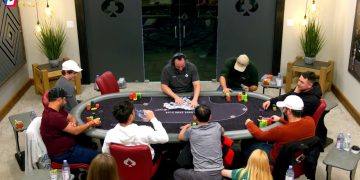
Position simply means where you sit relative to the dealer button. The button rotates clockwise after each hand, so every player cycles through each position. The closer you are to acting last after the flop, the more information you have — and information is the currency of poker.
| Position | Abbrev. | Acts Post-Flop | Advantage |
|---|---|---|---|
| Under the Gun | UTG | 1st | ❌ Weakest |
| Middle Position | MP | 2nd–3rd | ⚠️ Neutral |
| Hijack | HJ | 4th | ⚠️ Slightly better |
| Cutoff | CO | 5th | ✅ Strong |
| Button (Dealer) | BTN | Last | ✅✅ Best seat |
| Small Blind | SB | 1st post-flop | ❌ Worst post-flop |
| Big Blind | BB | 2nd post-flop | ⚠️ Gets a discount |

Why Late Position Is So Powerful
Late position players (CO, BTN) act after everyone else post-flop. This gives them:
- More information — they see how opponents react before committing chips
- Better bluffing spots — they can apply pressure knowing who’s shown weakness
- Pot control — they can choose to check behind and see a free card
- Easier value extraction — opponents can’t trap them without telegraphing it
Statistically, players in late position win significantly more money per hand than those in early position — even with identical hole cards. This is structural, not luck.
Pre-Flop Position Tactics
1. Buying Position
When two players limp ahead of you and you hold K♥Q♠ or A♥J♣ in the hijack, don’t just call. Raise to isolate and buy position. A 3x–4x raise forces the limpers into a decision, often resulting in heads-up play where you benefit from acting last.
2. The Re-Steal from Late Position
A button or cutoff open-raise of 2.5x the big blind is a standard steal attempt. If you’re in the small blind with A♠9♠, a 3-bet to 7–8x puts enormous pressure on the original raiser — especially if that player has been stealing wide.
3. The Squeeze Play
When a player raises and gets called before the action reaches you, a big 3-bet squeezes both players. The caller is “squeezed” between a raise and a potential 4-bet. This works best when:
- The original raiser has a loose opening range
- The caller is passive and unlikely to fight back
- You have position on both players
4. Implied Odds in Position
Small pocket pairs like 5♠5♥ and suited connectors like 7♥6♥ become far more valuable in late position. If you hit a set or straight, opponents can’t see it coming — and you extract maximum value because you act last.
Post-Flop Position Tactics
Floating the Flop
Floating means calling a bet on the flop while in position, intending to take the pot on a later street. Say your opponent c-bets on K♠7♦2♣ and you hold 9♥8♥. You call. The turn blanks. Your opponent checks — now you bet and take the pot. This works best against players who c-bet frequently but give up when called.
Pot Control in Position
If you hold 8♠8♥ and the flop comes A♣K♦3♠, you’re in trouble against a pre-flop raiser. In position, you can call the flop bet and check behind on the turn, keeping the pot small and protecting your stack.
Raising Probe Bets
When a player who called from the blinds leads into you with a small “probe” bet on the flop, this usually signals a weak hand. In position, raise. You represent the continuation bet they’d expect from the pre-flop raiser — and most probe-bettors will fold.
Common Position Mistakes
- Playing too wide from UTG — Tighten to premium hands. You’re out of position the entire hand.
- Limping from the button — The button is your best seat. Always raise or fold.
- Over-defending the blinds — The discount helps, but you’ll be out of position for three streets. Only defend hands that play well OOP.
- Ignoring opponent position — A UTG raise means a tighter range than a BTN raise. Adjust your response accordingly.
Final Thoughts
Position is not just a concept — it’s a weapon. The player who masters positional awareness will almost always have an edge over someone relying purely on card strength. Next time you sit down, don’t just look at your cards. Look at where you’re sitting. That second piece of information might be worth more.
♠ pokerjournal.org
Poker Position — FAQs
Q: Why is position important in poker?
Position determines how much information you have before acting. Acting last on every post-flop street holds a powerful edge — you see what all opponents do first.
Q: What is the best position in poker?
The dealer button (BTN). You act last on every post-flop street, giving maximum information and flexibility.
Q: What is “under the gun” in poker?
UTG is the first player to act pre-flop — directly to the left of the big blind. It’s the weakest position because you have no information about opponents’ intentions.
Q: What is the “hijack” seat?
Two seats to the right of the button. A strong raise from here can “hijack” the traditional stealing spots (cutoff and button).




Discussion about this post